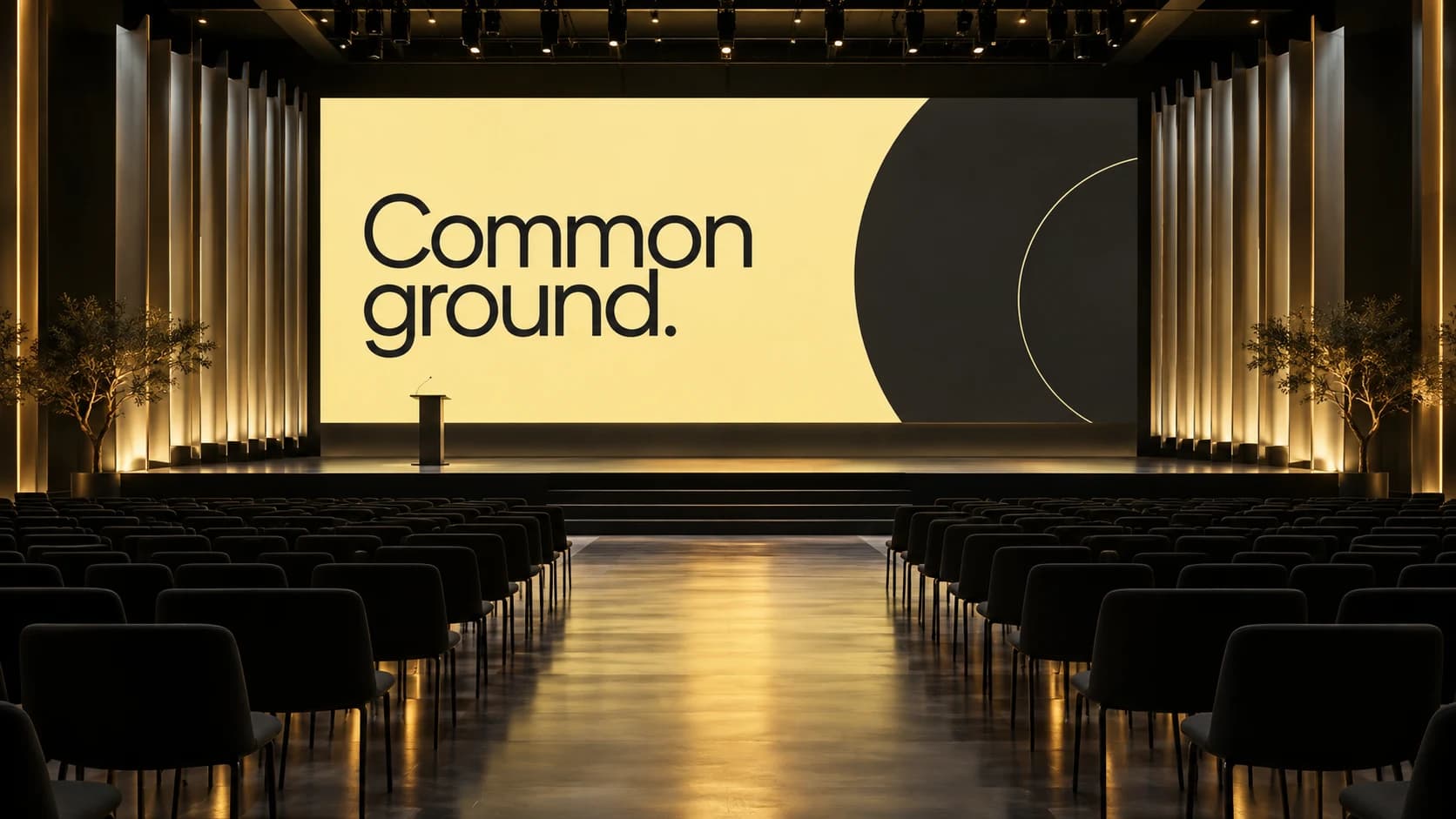
An event is a sequence, not a surface.
It is tempting to define event branding through its most visible elements: a logo, a stage backdrop, a badge. But an attendee experiences an event over time. An invitation sets expectations. Registration establishes a tone. The entrance helps them orient themselves. Sessions shape the substance, and the follow-up determines what remains useful.
A strong identity supports that sequence. It gives each moment an appropriate expression while keeping the event recognizable as a whole. The design brief should describe that journey before it becomes a list of assets.
Choose an idea that can carry content.
An event theme needs to do more than sound compelling on a title slide. It should help organize the subjects, conversations, and experiences the event is meant to support. A theme that cannot accommodate real session content will soon become decoration around a different story.
Test the central idea against the agenda. Can it frame a strategic keynote, a practical breakout, and a participant conversation without forcing the language? Can it be expressed visually in a way that is useful for information-rich content? These questions reveal whether the identity has enough depth to last through the event.
Create a visual grammar for different moments.
An invitation can build anticipation. A directional sign should reduce uncertainty. A presentation should make an argument easy to follow. Those are different jobs, so they should not be forced into an identical layout.
A visual grammar establishes the relationships that remain consistent: typography, color, image treatment, spacing, and recurring forms. Within that framework, each touchpoint can respond to its purpose. The result feels connected because the design decisions share a logic, not because every surface repeats the same artwork.
Make the system useful to the event team.
Events involve changing speaker names, late agenda updates, new room assignments, and last-minute production requests. A system that cannot tolerate change is incomplete. Editable templates, defined content limits, and clear file naming are as important as the hero graphic.
Identify which materials will change most often and give those formats particular attention. Establish a straightforward approval process and a single source for current assets. Production partners should know which elements are fixed and where adaptation is expected. This preparation gives the team a practical way to protect the identity under pressure.
Plan for what people take away.
The end of the live event is not the end of the communication. Recordings, summaries, resources, and leadership updates can help the ideas remain useful. When those formats are considered from the beginning, the identity has a natural way to continue beyond the venue.
For recurring events, decide what should remain recognizable from one edition to the next and what should evolve. That distinction gives the organization a reusable foundation without requiring every gathering to look identical.
The logo still matters. It is simply one part of a larger task: giving people a clear, coherent experience of why they have come together and what they can do with the ideas afterward.
Thinking through a similar challenge?
Let’s talk about your organization